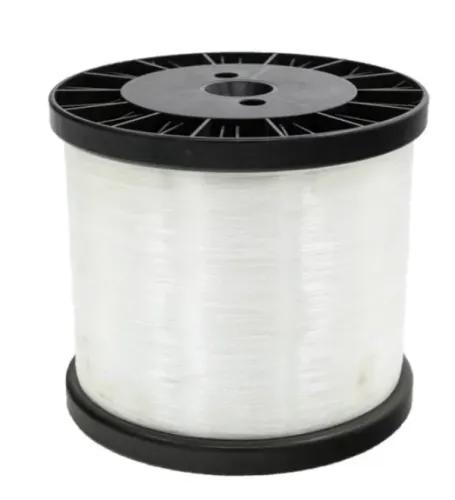
Nylon, PET and PBT are used to manufacture monofilaments for a range of technical and industrial applications. Although these materials may appear in the same broad product category, their characteristics are not identical. Buyers evaluating nylon/PET/PBT monofilament yarn should therefore choose according to the operating environment and finished-product requirements rather than treating the three polymers as interchangeable.
Nylon monofilament is known for a useful combination of strength, flexibility and abrasion-related performance. Depending on the grade and construction, it can be considered for filtration, netting, brushes, technical fabrics and other industrial products.
PET, or polyethylene terephthalate, is a polyester material. PET monofilament can provide good dimensional characteristics and is used in technical textiles, mesh, filtration and other engineered applications where consistent filament behaviour is important.
PBT, or polybutylene terephthalate, is another thermoplastic polyester. Its performance profile differs from both nylon and PET, making it suitable for selected technical applications where its specific physical properties are beneficial.
When comparing these materials, manufacturers should evaluate:
- Required tensile performance
- Flexibility and stiffness
- Dimensional stability
- Moisture exposure
- Abrasion conditions
- Temperature conditions
- Chemical environment
- Filament diameter
- Processing method
- Expected service conditions
Moisture behaviour is one area where material differences can become relevant. Nylon can absorb more moisture than polyester-based materials, potentially influencing dimensions or mechanical behaviour in certain environments. PET and PBT have different moisture characteristics and may be considered where lower moisture uptake is desirable.
However, selecting solely on moisture behaviour can be misleading. A technically appropriate yarn needs to perform across all relevant requirements.
For a filter manufacturer, for example, mesh construction, operating environment and dimensional consistency may be priorities. For a brush or technical component manufacturer, stiffness, recovery, abrasion and filament dimensions may carry greater importance.
This application-first approach is useful for industrial purchasers in Mumbai, Maharashtra, where manufacturers serve sectors ranging from textiles and engineering to filtration, packaging and processing.
Asdos Industries supplies monofilament yarn options for different industrial requirements. When evaluating nylon, PET or PBT, buyers can provide details about the end product and manufacturing process so that material characteristics can be considered alongside filament specifications.
Purchasing teams should also maintain clearly documented specifications for repeat requirements. Polymer type, diameter, colour if relevant, physical characteristics and quantity can all be recorded to reduce ambiguity between purchase orders.
The right nylon/PET/PBT monofilament yarn is therefore determined by more than the material name. Comparing polymer behaviour with actual production and end-use conditions provides a stronger foundation for technical sourcing and helps manufacturers maintain consistency as requirements scale.