Choosing between HDPE monofilament yarn, twisted twine and multifilament construction affects mesh stability, knot security, buoyancy, abrasion life and repair work. By the end, you will know how to specify the material, compare it with alternatives, test incoming reels and decide whether it suits your fishing gear.
Key takeaways
- Choose monofilament for stiffness and twine for flexibility and abrasion tolerance.
- Specify mesh size, twine diameter, breaking load, knot strength and UV protection.
- Record net dimensions, joining method and deployment loads before ordering reels.
- Compare HDPE, PP, nylon and PET by buoyancy, stretch, abrasion and water absorption.
Match the netting form to the job, not just the polymer
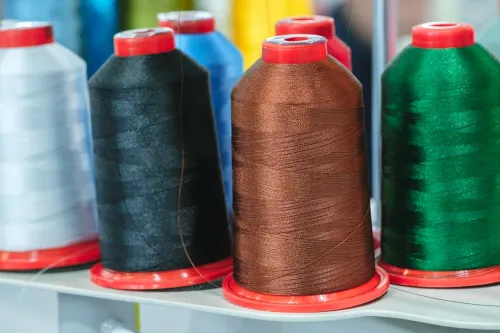
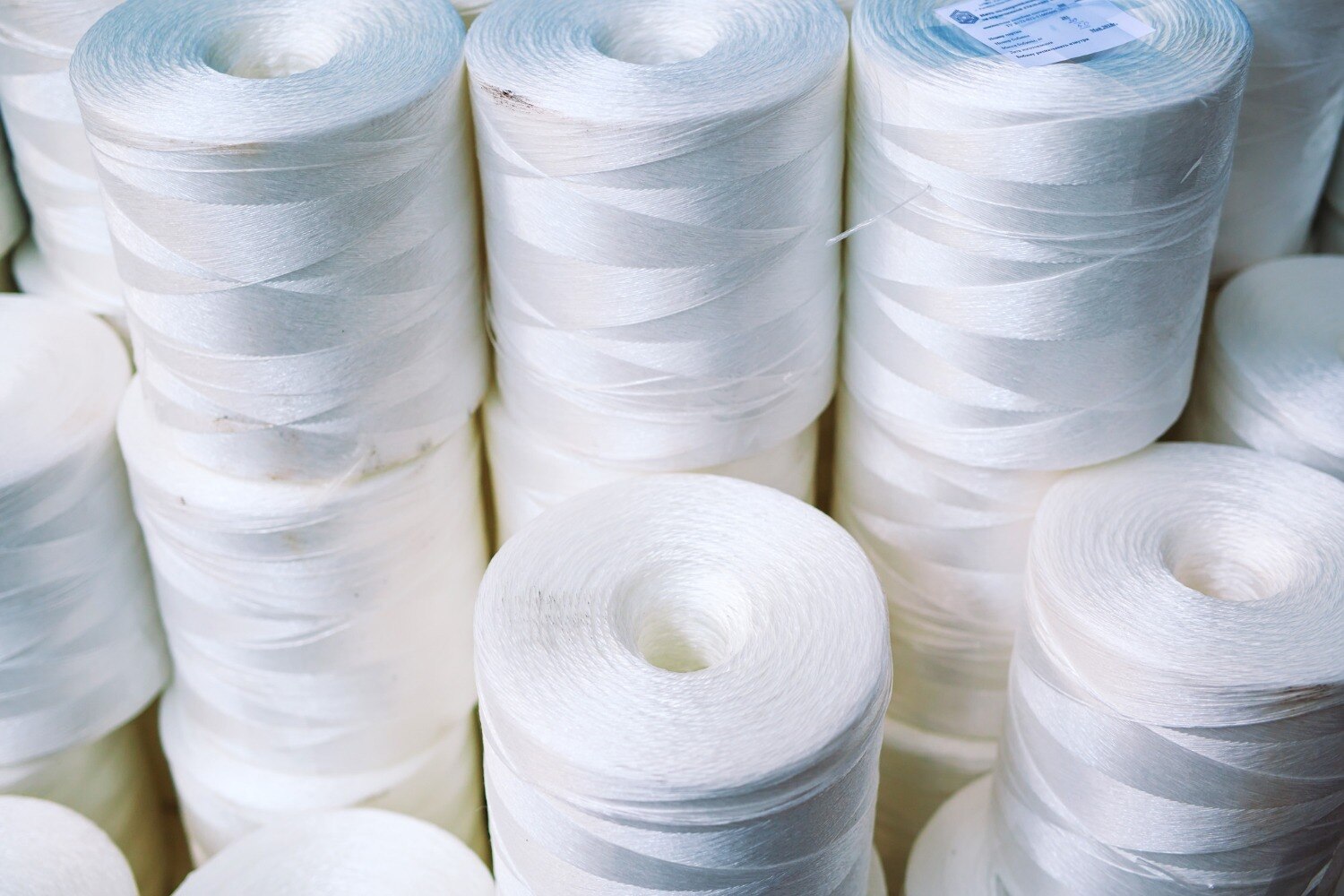
A monofilament net and an HDPE twine net can use the same polymer yet behave differently in the water. Monofilament is one extruded, relatively stiff filament; twine is made by twisting several monofilaments or multifilament yarns, and may also be braided.
| Construction | Handling and performance | Best fit |
|---|---|---|
| HDPE monofilament | Stiff, low water absorption, clean mesh openings and good abrasion resistance; knots can be less forgiving | Nets needing shape retention and low drag |
| Twisted HDPE twine | Better cohesion and handling than a single filament; twist changes stiffness, diameter and breaking force | General commercial netting where knot security and handling matter |
| Multifilament twine | Softer and more flexible, with more filament movement against abrasion; it can flatten or snag differently | Nets prioritising pliability during setting and hauling |
| Braided twine | Compact, stable construction with controlled handling; its tested knot and splice performance matters more than stated diameter | Repeated handling, joining or high-wear sections |
Do not replace monofilament with HDPE twine for commercial fishing nets by matching diameter alone. Diameter changes with test tension and construction, while mesh performance depends on linear density, breaking force, knot strength and elongation.
A softer synthetic twine for fishing nets may reduce tangling during deployment, but it can produce a different mesh shape and drag profile. Compare reels at equal tex or denier and specify mesh size, then check tested knot strength rather than assuming equal nominal diameter means equal fishing performance.
Specify twine and mesh with measurable requirements
Put the reel label and purchase order on the same page: “HDPE twine” is not a usable replacement specification by itself. State the polymer grade, UV stabiliser package, colour and construction, then set measurable limits for the twine and netting. This prevents a reel with a different load or mesh from entering the same gear.
- Specify linear density in tex or denier, filament count, number of plies, and twist direction.
- Set minimum breaking force, maximum elongation and minimum knot strength; do not use diameter as the only size control.
- State package length, permitted splice count and splice marking, reel identification, lot number and certificate of analysis.
- Record the net depth, target mesh opening, mesh tolerance, twine colour and whether the twine is twisted, braided or multifilament.
- Describe the service conditions: surface or bottom gear, abrasion, sunlight, temperature, fouling, time between hauls, and contact with rocks or metal.
Mesh wording must identify the measurement method and test condition:
| Measurement convention | Put on the order | Why it matters |
|---|---|---|
| Stretched mesh | Opening measured under a stated tension, wet or dry | Controls the fishing opening in service |
| Bar length | Length of one bar, with tension and condition stated | Prevents confusion with opening size |
| Knot-to-knot | Distance between adjacent knots, with tolerance | Matches net-making and repair measurements |
For hdpe twine fishing applications, request wet and conditioned-dry results when comparing nylon, and specify the expected buoyancy or shock load. A complete order lets you match replacement netting without guessing from appearance.
Build, deploy and maintain the net without wasting strength
A tight knot can still waste strength: crushing HDPE twine creates a sharp bend and concentrates load. Use the same netting knot throughout the panel, seat each knot firmly without flattening the strands, and leave a tail of about 10 cm. Do not melt the tail against the knot; heat can weaken the load-bearing fibres.
For synthetic twine for fishing nets, build and maintain the net in this order:
- Join matching twine by tex or denier, ply, twist and construction. Use a netting knot for mesh-to-mesh joins, or a properly formed splice for a continuous line. A thinner repair line creates a weak transition.
- Tension the net gradually across the full width. Remove slack before deployment, but do not pull until the mesh distorts; uneven tension shifts load into a few knots and accelerates breakage.
- Inspect every join after the first loaded haul. Replace knots that slip, open, or show flattened strands, and cut out chafed sections rather than tying a new piece over damaged twine.
- Wind the net onto a reel or in large, loose coils in the same direction each time. Keep it shaded, dry, clean and away from fuel, solvents, sharp edges and prolonged heat; never drag it across concrete.
Record the repair location and match replacement twine to the original minimum breaking force. Test a repaired section under controlled load before returning the net to service.
Compare HDPE with PP, nylon and PET before choosing
HDPE is the better choice for buoyant gear exposed to abrasion, sunlight and long soak times, provided the twine includes suitable UV stabilization. It has low water uptake and resists contact with rocks, metal and rough hauling equipment better than softer PP constructions.
| Material | Main advantage | Specify it when | Main limitation |
|---|---|---|---|
| HDPE | Buoyancy, low water uptake and abrasion resistance | Surface or midwater nets face sunlight, fouling, rocks or repeated hauling | Lower elasticity gives less shock absorption |
| PP | Lowest density, softness and flexibility | PP multifilament twine fishing nets need easy handling and strong buoyancy | Lower heat resistance and greater UV sensitivity require controlled storage and stabilization |
| Nylon | High elasticity and shock absorption | Bottom gear or nets experience sudden loads, wave shock or snag release | Moisture changes wet strength; require wet and conditioned-dry test data |
| PET | Low stretch, dimensional stability and sinking behaviour | You need a stable, low-elongation net that stays submerged | Greater density removes buoyancy and can increase handling stiffness |
For HDPE twine fishing applications, state whether the net is surface or bottom gear, then record abrasion, sunlight, temperature, fouling, rock or metal contact and exposure time between hauls. Compare materials at equal linear density and tested breaking force, not by diameter or ply count alone.
Choose nylon for shock loading, PP for softness and maximum buoyancy, and PET for low stretch and sinking stability.
Inspect the reel and buy against a complete specification
A reel is not ready for acceptance because its label says “HDPE twine.” Match the delivered reel to the purchase specification, then record the checks against its lot number.
1. Confirm the product form: monofilament yarn, twisted multifilament twine or braided twine. These are not interchangeable in net construction.
2. Check the polymer grade, UV-stabiliser package, colour, tex or denier, filament count, number of plies and twist direction.
3. Compare the stated minimum breaking force, elongation and knot strength with the ordered values. Do not approve diameter alone; test tension and construction change its measured size.
4. Measure or verify the package length and inspect the winding. Reject crushed flanges, loose layers, crossed wraps, contamination and moisture-damaged packaging.
5. Ask for the splice policy. The reel documentation must state whether splices are permitted, their maximum number, and how each splice is identified.
6. Match the reel label, invoice and certificate of analysis to the same lot number. The certificate should report the tested linear density, breaking force and elongation.
7. Record the gear conditions—surface or bottom use, abrasion, sunlight, fouling and contact with rock or metal—so the specification fits the job.
A fishing net twine supplier in Mumbai, including Asdos Industries, should be able to clarify which reel data are measured values and which are nominal targets. For HDPE twine for commercial fishing nets, quarantine any reel with missing lot identification or results that cannot be traced to the delivered batch.
Related products
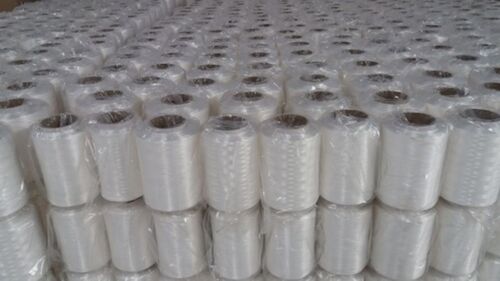
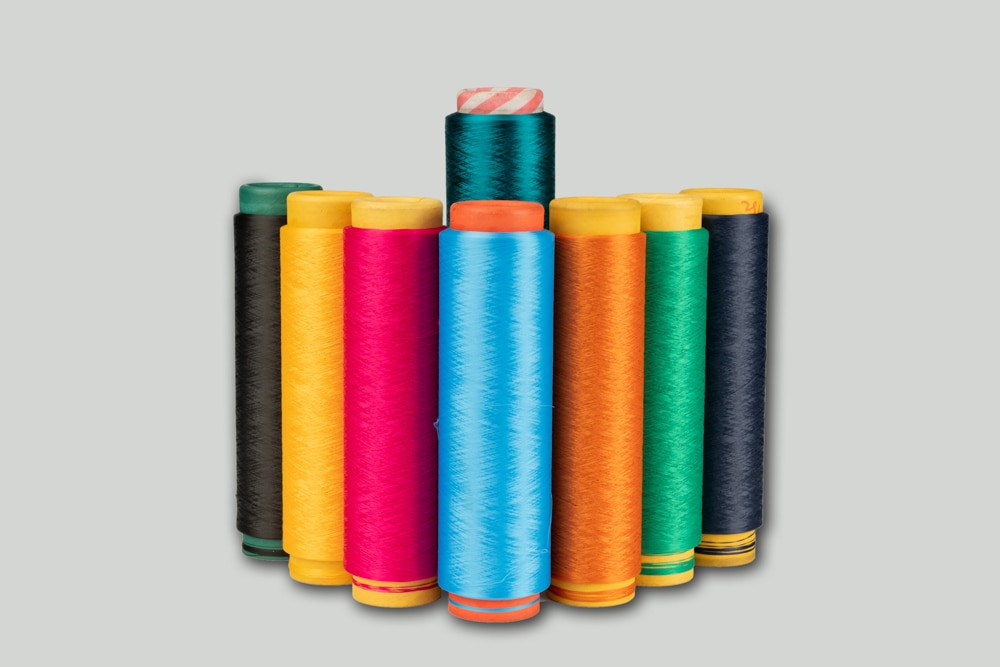 | Monofilament Experience unrivaled strength and resilience with our HDPE Monofilament Yarn. View product → |
 | TWINE PP (polypropylene) multifilament twine is a strong, lightweight, and versatile material made from multiple strands of polypropylene fibers. View product → |
Frequently asked questions
What is the difference between HDPE monofilament and HDPE twine in fishing nets?
Monofilament uses one relatively stiff extruded filament, while twine combines several filaments by twisting or braiding. That construction changes flexibility, handling, abrasion behaviour and net shape even when both use HDPE.
What measurements should you specify when buying twine for a fishing net?
State the twine construction, diameter or linear density, mesh size, breaking load, knot strength, net dimensions, colour, UV stabilisation and reel length. Also identify whether the mesh is measured stretched or knot to knot.
How do HDPE, PP, nylon and PET compare for fishing nets?
HDPE offers low water absorption and buoyancy; PP is lightweight and commonly used in multifilament twine; nylon provides higher stretch and wet strength; PET offers stiffness and abrasion resistance. Select the polymer after matching those properties to the net's job.
How can you inspect a reel before buying synthetic twine for fishing nets?
Check the reel label, batch or lot number, declared length, construction, diameter or linear density, colour consistency and visible damage. Request test values for breaking load and knot strength, then compare them with your complete net specification.
Keywords