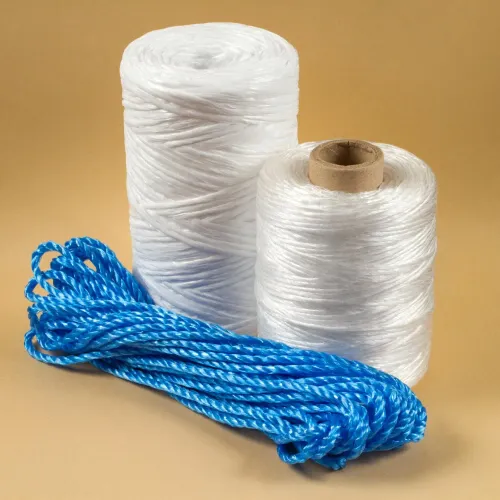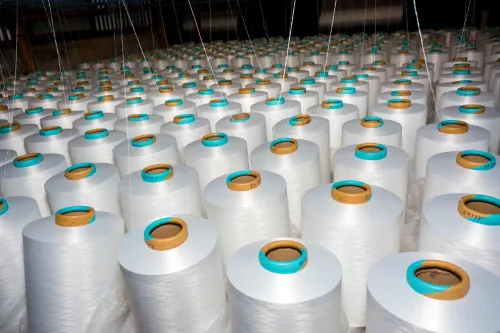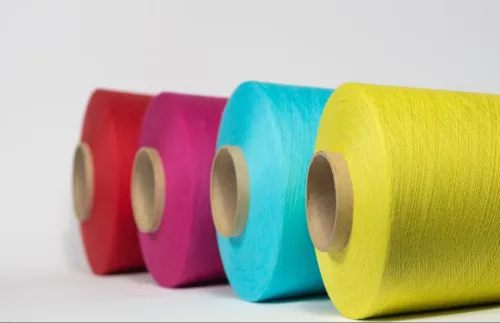
The better netting twine depends on whether your main problem is handling, buoyancy, abrasion, ultraviolet exposure or load retention. By comparing construction as well as polymer, you can specify a net that matches the target species, fishing method and working environment instead of choosing on material name alone.
Key takeaways
- Confirm whether the HDPE sample is monofilament or multifilament before comparing it with PP twine.
- Choose PP for softer handling and HDPE for lower water drag in suitable net designs.
- Test knot strength, abrasion, UV exposure and wet-cycle performance on finished net samples.
- Request construction details, denier, breaking load and batch records from every supplier.
What are you actually comparing: PP multifilament or HDPE monofilament?
The comparison is between a polymer, a yarn construction, or a complete netting system—and those are not interchangeable. PP and HDPE identify the resin; multifilament and monofilament identify how that resin becomes yarn. A buyer assessing pp multifilament twine hdpe twine for fishing nets must first identify the HDPE product’s construction.
| Option | What you are comparing | Why the result changes |
|---|---|---|
| PP multifilament | Several fine PP filaments twisted or bundled into twine | Softer handling and flexible knot seating |
| HDPE monofilament | One or more solid HDPE strands | Greater stiffness and a different abrasion and visibility profile |
| HDPE multifilament | Multiple HDPE filaments in one twine | Performance depends on filament count, twist and finish |
| Complete netting system | Twine, mesh size, knots, net depth and rigging together | Fishing performance can outweigh the polymer choice |
A thicker, tightly twisted HDPE monofilament is not a fair comparator for a fine PP multifilament. Denier, filament count, twist, coating, knot design and mesh size all alter drag, stretch, abrasion and repair behaviour. Compare equal finished-net specifications, not labels alone.
Both materials normally float because their densities are below water: PP is about 0.91 g/cm³, while HDPE is about 0.94–0.97 g/cm³. HDPE twine for fishing nets is not automatically stronger in use; a poorly specified HDPE construction can lose to a well-made PP net once knots, hauling cycles and chafing enter the test.
How do handling, knots and water drag differ in a finished net?
A finished net’s handling comes from filament construction as much as polymer. PP multifilament twine folds softly, packs compactly and usually seats into a stable knot without sharp kinks.
HDPE monofilament holds a stiffer shape, resists tangling and can make repairs feel less pliable; its knots need a design and tightening method suited to smooth, rigid line.
| Construction | Folding and knots | Visibility and fouling | Movement through water |
|---|---|---|---|
| PP multifilament | Soft, flexible and easy to knot; crossings settle closely | Fuzzy surfaces can collect algae or debris; colour controls visibility | Floats and conforms readily, with little shape memory |
| HDPE multifilament | Firmer than PP but still manageable; knot seating depends on twist and finish | Smoother than PP in some specifications; colour and diameter control visibility | Floats while retaining more shape under current |
| HDPE monofilament | Stiff, springy and more demanding to repair; poorly selected knots can slip or cut in | Smooth surface sheds fouling better; clear line can be harder to see underwater | Floats and presents a tauter profile, but resists folding |
For nets dragged over rocks, rails or hauling gear, a smoother HDPE construction can reduce snagging and surface fouling. For compact storage, repeated deployment and quick hand repairs, PP multifilament is often easier to work with.
Both polymers normally float: PP is about 0.91 g/cm³ and HDPE about 0.94–0.97 g/cm³, so neither is a sinking choice without added weight. Judge HDPE twine for fishing nets in the finished mesh, because knot loss, fouling and mesh tension can outweigh straight-yarn results.
Which twine withstands load, abrasion, sunlight and repeated wetting?
Under comparable diameter, linear density and construction, HDPE usually gives the stronger first trial for chafing and dimensional stability; PP multifilament often gives the more forgiving knot and handling performance. That is not a polymer verdict: filament count, twist, braid, coating and knot design can reverse the result.
| Property | PP multifilament | HDPE twine |
|---|---|---|
| Tensile load | Good strength, with greater stretch in many constructions | Often higher strength-to-weight and lower stretch |
| Knot stress | Soft filaments conform well, reducing sharp bend points; poor twist can slip | Stiffer yarn can concentrate stress at knots; knot design matters |
| Chafing | Filament scuffing can weaken the yarn quickly against rock or hauling gear | Usually the safer starting choice for repeated abrasion |
| UV exposure | Loses strength without a stabilizer package | Also degrades; black, UV-stabilized grades can retain performance better |
| Wet–dry fatigue | Flexibility helps folding, but repeated loading still damages filaments | Resists wear well, yet bending and creep remain concerns |
| Temperature changes | Softens at lower temperatures than HDPE and can stretch under sustained load | Stays dimensionally stable over a wider practical range, but becomes less flexible in cold |
| Long-term deformation | Sustained tension can produce creep and permanent stretch | Also creeps; its lower stretch often preserves mesh dimensions better |
Do not accept “UV resistant” as proof. Request stabilizer details and retained-strength or accelerated-UV data, then test finished netting rather than yarn alone.
Compare knot or mesh breaking force, abrasion after hauling cycles, mesh size, and breaking load after repeated wetting and drying. The safer choice is the twine that retains performance in your actual net design, not the one with the highest straight-yarn rating.
Which material fits your species, net design and fishing conditions?
Choose the material that matches the catch load and the abuse your finished net will receive, not the polymer name alone. Small mesh for delicate or easily damaged species favours pliability and secure knot seating; large mesh for heavy fish demands verified mesh and knot breaking force.
| Option | Best fit | Main caution |
|---|---|---|
| PP multifilament twine | Flexible nets, compact packing, small mesh, moderate current and species requiring gentle contact | Softer construction can wear faster against rocks, rails and hauling gear |
| HDPE twine for fishing nets | Deep nets, strong current, heavy expected catch loads and repeated chafing | Greater stiffness can make folding, knot adjustment and repairs less convenient |
| Either material | Floating gillnets or panels in fresh or salt water where abrasion and load are controlled | Both normally float; PP is about 0.91 g/cm³ and HDPE about 0.94–0.97 g/cm³ |
Net depth and current increase strain on the headline, leadline and mesh corners. Use HDPE as the first trial when those forces combine with rock, boat-rail or winch abrasion; trial PP multifilament twine when low density, flexibility and quick packing matter more.
Salinity alone rarely decides between them because both materials normally float in fresh and seawater.
Test the actual net, not only a yarn certificate. Compare mesh opening, knot or mesh breaking force, hauling cycles, wet–dry repetition and fouling with the intended species and catch load. A high-tenacity HDPE net can fail sooner than a well-finished PP net if its knots, mesh orientation or construction are poorly specified.
How should you compare samples and qualify a fishing twine supplier?
Approve samples only after testing the same construction: filament count, nominal tex or denier, ply, twist, coating, colour and reel length. Do not compare PP multifilament with HDPE monofilament and blame the polymer for differences caused by construction.
- Run equal-length samples through breaking-force, knot-strength, elongation and abrasion tests.
- Fish both samples in identical nets, recording knot seating, hauling damage, fouling, wet–dry cycles and actual reel consumption.
- Convert pp fishnet twine wholesale quotes to cost per kilogram and cost per usable metre. Include reel length, splice waste, freight, packaging, duties and rejected material.
- Request a lot-specific certificate of analysis naming polymer, tex or denier, ply, twist, breaking force, elongation, colour, UV treatment and batch number.
Check three or more reels from the proposed lot. Uneven winding, frequent splices, short reels or inconsistent diameter can create more cost than a lower quoted price saves.
| Check | Evidence to request | Disqualifying warning |
|---|---|---|
| Manufacturing control | Extrusion, twisting and winding location; equipment list; retained samples | Supplier cannot say where yarn is made |
| Traceability | Batch number printed on reels and matching test report | Certificate is generic or undated |
| Capacity | Monthly output, minimum order, repeat-lot records and lead time | No evidence of consistent production |
| Packing | Export packing specification and moisture protection | Reels arrive loose or unidentified |
A fishing twine manufacturer should answer these questions directly. A pp multifilament twine supplier in Mumbai, including Asdos Industries, should identify whether it manufactures or trades the yarn and show in-house test records before you approve a repeat order.
Related product
 | TWINE PP (polypropylene) multifilament twine is a strong, lightweight, and versatile material made from multiple strands of polypropylene fibers. View product → |
Frequently asked questions
What are you actually comparing: PP multifilament or HDPE monofilament?
PP and HDPE identify the polymer, while multifilament and monofilament identify yarn construction. Confirm both before comparing samples.
How do handling, knots and water drag differ in a finished net?
PP multifilament usually offers softer handling and secure knot formation, while HDPE monofilament can create less water drag but needs design-specific testing.
Which twine withstands load, abrasion, sunlight and repeated wetting?
Performance depends on denier, construction, additives, knotting and net design. Compare breaking load, abrasion loss, UV exposure and wet-cycle results on finished nets.
How should you compare samples and qualify a fishing twine supplier?
Request matching construction and denier, then check breaking load, elongation, diameter, colour consistency, batch identification and supplier quality records.
Keywords