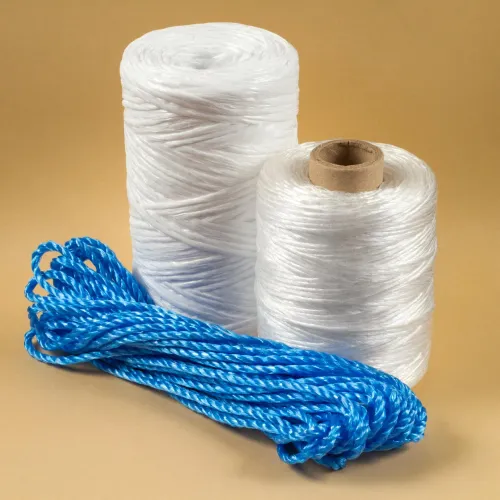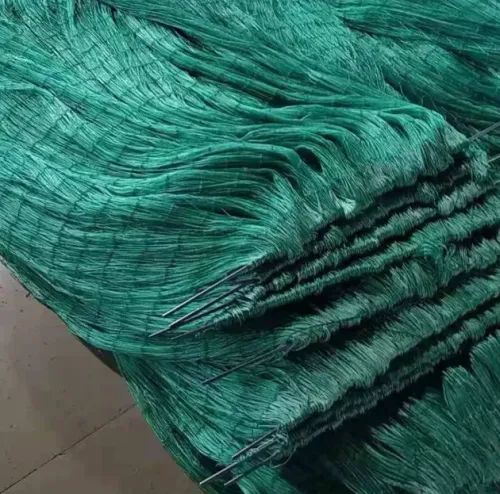
Netting and mesh manufacturers need yarn that works consistently with both their equipment and finished-product specifications. When evaluating HDPE monofilament yarn for these applications, filament diameter alone is not enough. Material behaviour, consistency and processing requirements should be assessed together.
HDPE is widely considered for netting and mesh because it combines lightweight characteristics with low moisture absorption and useful durability for suitable applications. The monofilament construction also provides a single continuous strand, making it different from multifilament yarn.
The first evaluation point is diameter consistency.
In mesh and woven structures, filament dimensions can influence the final geometry, appearance and performance of the product. Excessive variation may affect processing and make it harder to maintain consistent finished specifications.
Tensile performance is another important factor. The required level depends on the product. Agricultural mesh, protective netting and other industrial structures do not necessarily operate under identical loads.
Flexibility should also match the manufacturing process. A filament that is too stiff or too flexible for a particular setup may create processing difficulties even when its basic dimensions are correct.
Before approving a yarn, manufacturers can review:
- Polymer and material specification
- Filament diameter
- Diameter tolerance
- Tensile requirements
- Elongation characteristics
- Flexibility or stiffness
- Colour requirements
- Equipment compatibility
- Environmental exposure
- Finished mesh or net specification
Production trials can be particularly useful when switching suppliers or introducing a different filament specification. A sample may look acceptable when examined individually but behave differently once processed at operating speed.
Manufacturers should also consider the environment in which the finished net or mesh will be used. Outdoor exposure, moisture, chemicals and mechanical demands can all influence material selection.
Mumbai and the wider Maharashtra market includes manufacturers serving agriculture, packaging, construction, industrial processing and related sectors. Net and mesh products supplied to these markets may face significantly different service conditions, making application-specific specifications essential.
Asdos Industries manufactures HDPE monofilament products for industrial applications. For a manufacturer evaluating a new requirement, sharing the final product application and processing details can help narrow down the required filament characteristics.
Consistency between orders is another important procurement consideration. Once a specification has been successfully tested, purchasing teams can record the approved parameters for future requirements. This can reduce unnecessary variation and simplify supplier communication.
Evaluating HDPE monofilament yarn as an engineered manufacturing input rather than simply a raw material helps netting and mesh producers make better sourcing decisions. The most suitable product is the one that aligns filament properties, processing behaviour and finished-product requirements within a clearly defined specification.
Keywords