A reel of twine is not a completed fishing net, and terms such as diameter, denier, breaking strength and package weight describe different properties. By checking the construction, test values, winding quantity, finish and shipment documents, you can compare PET and HDPE offers without paying for an unsuitable netting material or an inaccurately sized reel.
Key takeaways
- Confirm whether the quote covers twine only or complete netting and rigging.
- Request denier, strand count, twist, reel weight, colour, and packing details.
- Compare PET, HDPE, nylon, and polypropylene against water absorption and abrasion needs.
- Match the quote to a written specification before approving a wholesale order.
What does a PET or HDPE twine order actually include?
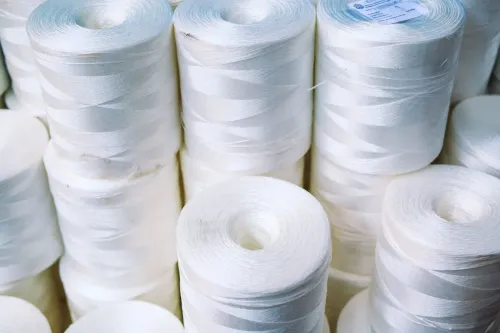
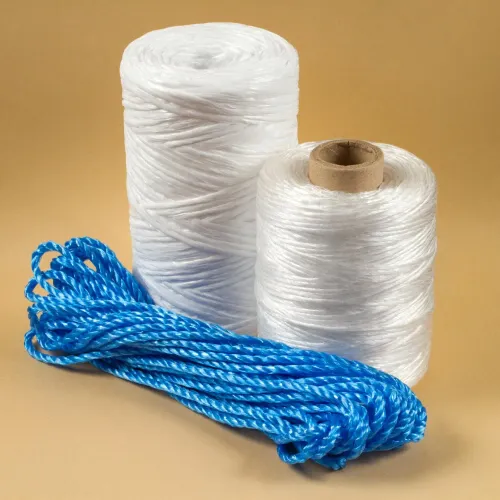
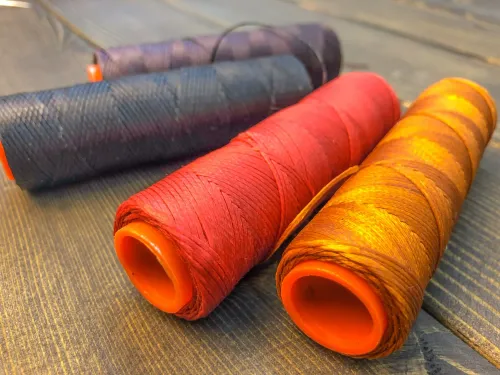
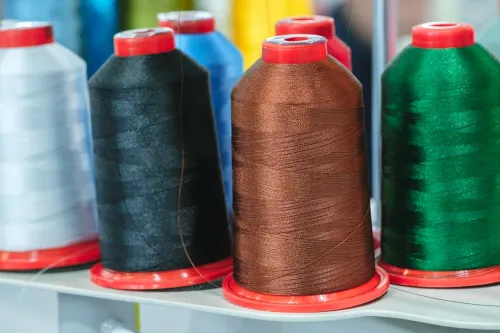
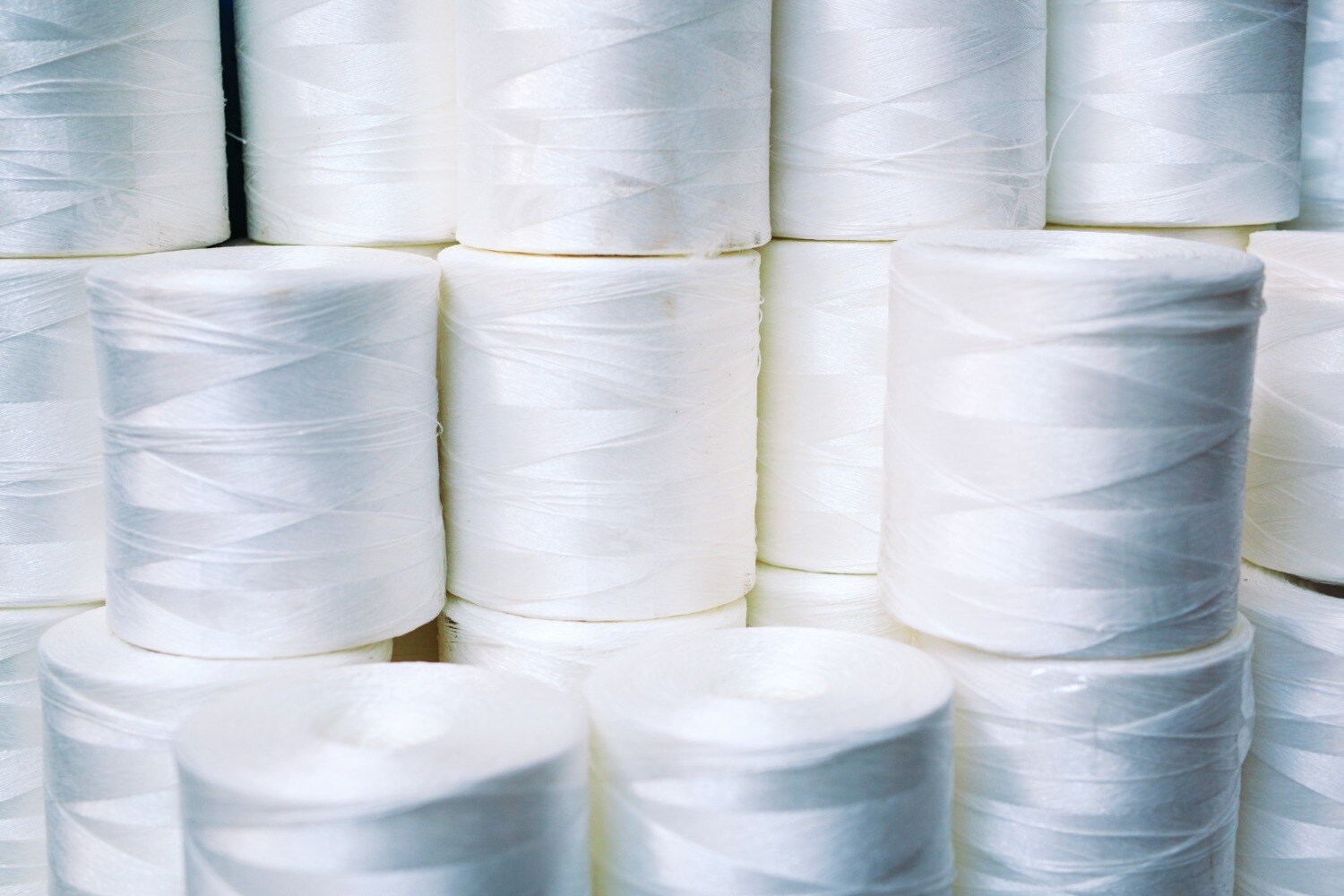
A twine order normally contains the twine wound on a reel, cone, spool, or hank—not a finished fishing net. Net panels, floats, sinkers, joining twine, clips, needles, and rigging hardware are separate unless the quotation lists them.
Before accepting delivery, check that the order confirmation identifies:
- Material: PET or HDPE, plus recycled content or resin grade when specified.
- Construction: multifilament or monofilament, total tex or denier, ply count, twist direction, and approximate diameter. A diameter alone is inadequate because multifilament twine compresses under tension.
- Performance: straight breaking force, elongation, knot strength, and retained strength after wetting or abrasion. The knot can fail before the untied twine.
- Appearance and treatment: colour reference, dye or pigment consistency, and whether the twine is dry, lubricated, waxed, or otherwise finished. Finish changes handling, knot seating, abrasion, and measured strength.
- Package basis: winding length, net weight or gross weight, reel dimensions, and permitted quantity tolerance.
- Traceability: lot number, manufacturing origin, supplier status, minimum order quantity, lead time, and whether values are guaranteed or nominal.
For specifications, compare PET multifilament fishnet twine and HDPE twine by strength per unit linear density, knot behaviour, and wet or abraded strength—not by appearance alone. Confirm UV stabilisation for outdoor use and record every treatment in the order confirmation.
Which details belong on a PET multifilament twine specification sheet?
A reliable offer identifies more than a diameter and the word PET. Multifilament twine compresses under tension, so diameter alone cannot predict strength or net performance. Ask for a guaranteed or nominal value for every measurement.
- Total linear density in tex or denier, number of filaments and plies, twist direction, approximate diameter, breaking force, elongation, and winding length
- Knot strength, retained strength after wetting and abrasion, UV stabilisation, water absorption, colour, and permitted tolerances
- Reel or spool format, net weight, lot size, minimum order quantity, production lead time, and manufacturing origin
- Supplier status: manufacturer, converter, or stockist; a stockist may offer fixed inventory, while a converter may control ply, twist, colour, and reel length
- For recycled pet fishnet twine, recycled-content percentage, pre-consumer or post-consumer source, recycling process, lot traceability, and evidence for each certification claim
| Detail | Adequate offer | Red flag |
|---|---|---|
| Linear density | Tex or denier with tolerance | Diameter only |
| Strength | Breaking force plus knot and wet/abrasion results | Straight-line force only |
| Construction | Ply count, twist, filament form | “Multifilament” without construction |
| Supply control | Lot, origin, MOQ, lead time, guaranteed or nominal status | Undated catalogue figure |
| Verification | Technical data sheet, packing list, lot-specific certificate of analysis, and retained sample | Label claims such as “UV” or “recycled” without documents |
Compare breaking force per unit linear density, not just thickness. Request a retained sample and lot-specific results before approving a commercial order.
What must an HDPE twine specification state?
A comparable quote starts with more than the word HDPE. Your hdpe twine specifications must identify the resin grade, construction, size, performance, finish and exact package basis; otherwise two “reels” can contain different products.
Request these construction details:
- Monofilament or multifilament construction, total tex or denier, ply count, twist direction and nominal diameter.
- Breaking force, elongation, knot strength, abrasion result and strength retention after wetting.
- UV stabilisation level or test evidence, colour reference, pigment consistency, and finish: dry, lubricated, waxed or another treatment.
- Tolerance limits for diameter, linear density, breaking force and winding length.
| Quotation value | Record this specifically | Why it matters |
|---|---|---|
| Resin and structure | HDPE grade; monofilament or multifilament; tex or denier; plies and twist | Similar diameters can handle, knot and abrade differently |
| Performance | Breaking force in newtons or kilograms-force; elongation percentage; knot strength; abrasion and wet-strength results | The knot or wet twine can fail before straight twine |
| Package | Net twine kilograms, gross reel weight, estimated metres, core dimensions, reel count, and packages per carton or pallet | “One reel” cannot normalise price or delivered quantity |
Ask for a technical data sheet, a packing list showing reel count and net weight, and a lot-specific certificate of analysis when tensile values control acceptance. Treat UV, recycled-content and other claims as unverified until their certificates arrive.
How should you choose between PET, HDPE, nylon and polypropylene twine?
Choose by the finished net’s position and load path, not by diameter alone. PET has a density of about 1.38 g/cm³ and normally sinks; HDPE is about 0.94–0.97 g/cm³ and normally floats. Nylon is denser than water, while polypropylene is about 0.90–0.91 g/cm³ and floats.
| Material | Water, sunlight and abrasion | Knots, handling and net design |
|---|---|---|
| PET | Good abrasion resistance and dimensional stability; absorbs more moisture than polyolefins; normally sinks | Firm handling and stable mesh; suits bottom nets or lead-line sections; test wet knot strength |
| HDPE | Very low water absorption; floats; sunlight exposure requires stated UV stabilisation; heat can damage strength | Light, flexible handling; suits floating panels; smooth fibres can reduce knot security |
| Nylon | Absorbs water and becomes heavier; wet strength and elongation change; sunlight requires protection | High flexibility and useful knot seating; suits nets needing stretch, but wet-load design must use retained strength |
| Polypropylene | Floats, resists water absorption, and needs UV protection; abrasion and heat limits depend on grade | Light and easy to handle; useful for buoyant sections, but low stretch and knot performance must match mesh loading |
Compare breaking force per tex, elongation, knot strength, and strength retained after wetting and abrasion. A knot can fail before straight twine, especially with smooth HDPE or polypropylene. Multifilament twine usually conforms and seats differently from monofilament, so check mesh size, twine stiffness, twist, finish and knot type together.
Floats, coatings and attached weights can change the assembly’s final buoyancy.
How do you verify a wholesale twine quote before ordering?
A reel price is meaningless until you convert it to price per net kilogram and price per stated metre. A pet fishnet twine wholesale quote must match polymer grade, virgin or recycled content, total tex or denier, ply, breaking-force requirement, net twine weight, winding length and delivery basis.
A cheaper reel may simply contain less twine or a lighter construction.
1. Request one comparison sheet showing reel price, net kilograms, estimated metres, core dimensions, gross weight and packages per carton or pallet. Calculate price per kilogram and per 1,000 metres, then check breaking force per tex, knot strength, and retained strength after wetting or abrasion.
2. Ask the pet multifilament twine supplier in mumbai whether it is the manufacturer, converter or stockist. Obtain manufacturing origin, available lot size, minimum order quantity, production lead time, and written confirmation of which values are guaranteed rather than nominal. Asdos Industries, for example, should be assessed against these same measurable fields.
3. Match the offer to a signed specification: PET or HDPE grade, construction, colour reference, finish, tolerances, breaking force, elongation and test method. Reject a quote that gives only diameter; multifilament twine compresses under measurement tension.
4. Before payment, request the commercial invoice, packing list, certificate of origin, certificate of analysis or test report, HS code confirmation, and bill of lading or air waybill details. Confirm which documents your importer, bank and customs broker require, and ensure the invoice states net weight, reel count and agreed Incoterm.
Related product
 | TWINE PET Multifilament Fishnet Twine Embrace both strength and sustainability with our PET Multifilament Fishnet Twine. View product → |
Frequently asked questions
What does a PET or HDPE twine order actually include?
It normally includes twine wound on a reel, cone, spool, or hank. Net panels, floats, sinkers, joining twine, clips, needles, and rigging hardware are separate unless the quotation lists them.
Which details belong on a PET multifilament twine specification sheet?
Request the material, whether the PET is virgin or recycled, filament construction, denier or linear density, strand count, twist, colour, reel or hank weight, packing method, and permitted tolerances.
What must an HDPE twine specification state?
An HDPE specification should identify the polymer, twine construction, linear density or size, strand count, twist, colour, winding format, net weight, packing, and quality tolerances.
How should you choose between PET, HDPE, nylon, and polypropylene twine?
Compare abrasion resistance, water absorption, stretch, buoyancy, UV exposure, knot behaviour, stiffness, and cost against the fishing or industrial application. Choose the material that matches the operating conditions rather than the lowest quoted price.
How do you verify a wholesale twine quote before ordering?
Check that the quote repeats the agreed material, size, construction, colour, winding format, quantity, packing, delivery terms, and sample or specification reference. Ask the supplier to clarify every item that is missing.
Keywords