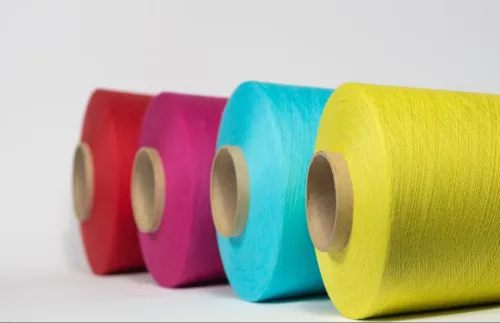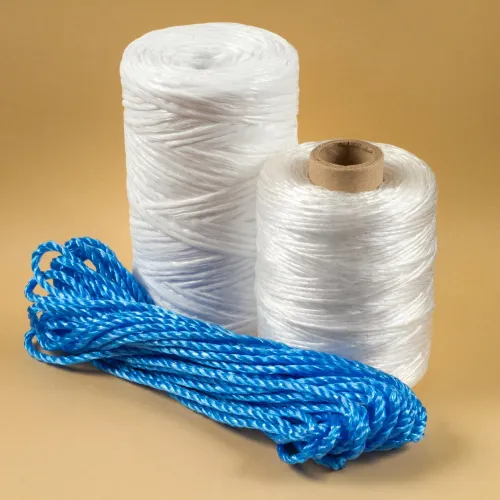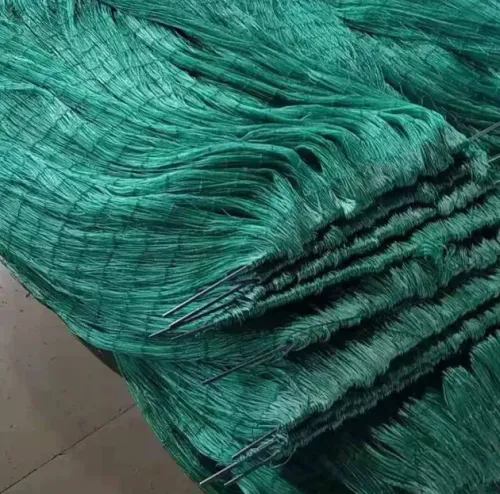
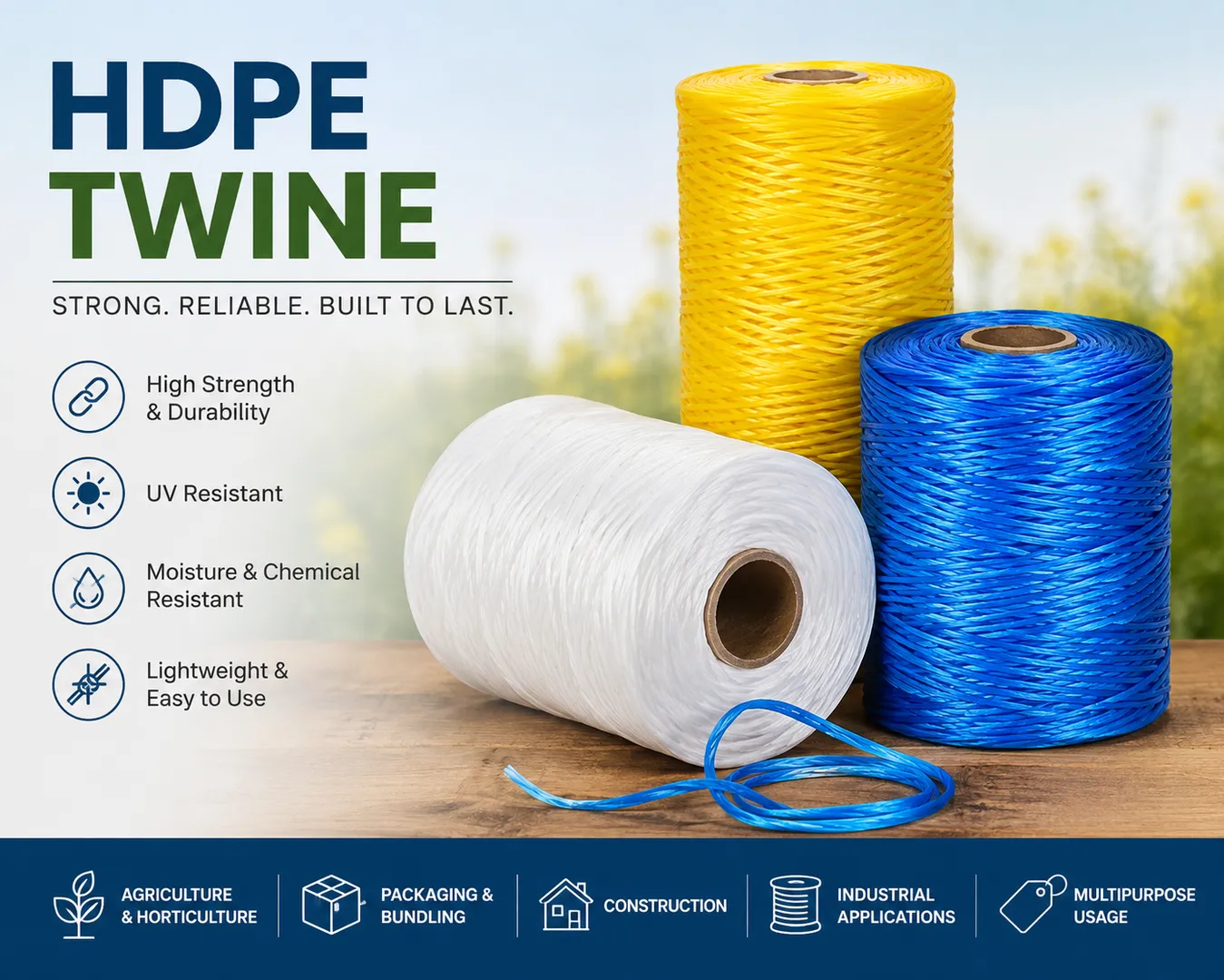
HDPE twine is a lightweight synthetic cordage material manufactured from high-density polyethylene. It is used in agriculture, fishing, packaging, construction and general industrial operations because it can provide practical strength while resisting routine exposure to water and moisture.
In Mumbai and other parts of Maharashtra, HDPE twine is frequently sourced for commercial applications that involve tying, bundling, net fabrication or temporary support. However, the term “HDPE twine” covers products with different constructions, sizes and performance levels. Buyers need to examine the actual specification before deciding whether a product is suitable.
How HDPE Twine Is Constructed
Twine can be made by twisting or combining multiple strands into a functional cord. The number of strands, twist level, strand uniformity and final diameter affect its handling and strength.
A tightly controlled twist can improve structural stability, but the ideal construction depends on the application. Twine used for net making may need reliable knot retention, while twine used for packaging may be assessed more closely for breaking strength, ease of handling and cost per use.
Common variables include:
- Number of plies
- Twisted or braided construction
- Twine diameter
- Linear density
- Breaking strength
- Elongation
- Twist direction
- Colour
- Package weight and winding format
The product should unwind smoothly without tangling, flattening or creating avoidable interruptions during processing.
Typical Uses of HDPE Twine
Agricultural operations use synthetic twine for crop support, bundling and net-related products. The required strength depends on the crop weight, support span and duration of exposure.
Fishing and aquaculture businesses may use HDPE twine in net fabrication and repair. For such applications, knot behaviour, water exposure and repeated handling require careful consideration.
Additional uses include:
- General packaging and bundling
- Protective and boundary nets
- Construction-site applications
- Horticultural support systems
- Commercial fishing nets
- Aquaculture cages and mesh products
- Temporary securing tasks
- Industrial tying and material handling
HDPE twine should not automatically be used as lifting equipment, fall-protection equipment or safety-critical load-bearing cordage. Such applications require properly rated products designed and certified for the intended purpose.
Quality Factors That Influence Performance
Breaking strength is one of the most important measurements, but it should not be viewed in isolation. A twine with suitable strength but inconsistent diameter may create uneven knots, irregular nets or difficulty during automated processing.
Elongation affects how the twine responds when tension is applied. Some applications need limited stretch for dimensional control, while others may benefit from a degree of flexibility.
Buyers should also check:
- Uniformity across the entire package
- Frequency of joints
- Knot-holding performance
- Abrasion behaviour
- Resistance to expected environmental conditions
- Colour consistency
- UV stabilisation where necessary
- Package integrity during transport
- Batch traceability
For products used outdoors in Mumbai’s combination of intense sunlight, monsoon moisture and coastal conditions, the anticipated exposure period should be communicated to the manufacturer. Appropriate stabilisation and testing may be necessary for prolonged use.
Selecting the Correct Twine
Start by defining whether the twine will be used for tying, net production, crop support, packaging or another industrial process. Next, establish the expected working load, required diameter, exposure conditions and preferred package format.
A production sample should be tested for strength, knotting, unwinding and compatibility with existing equipment. Price comparisons should use equivalent specifications because two packages with similar weight may differ considerably in diameter, length, construction and usable output.
Asdos Industries manufactures HDPE twine and other synthetic yarn and twine products for commercial users. Clear technical communication between the buyer and manufacturer helps reduce trial-and-error procurement. Sharing the precise end use, required construction, strength expectations, colour, package size and order volume creates a stronger foundation for consistent supply and dependable processing.
Keywords