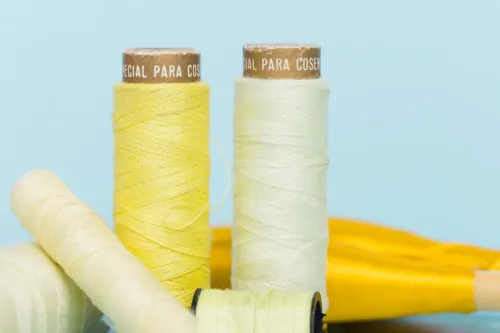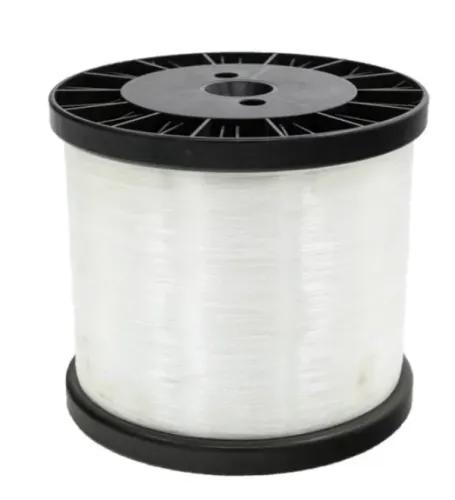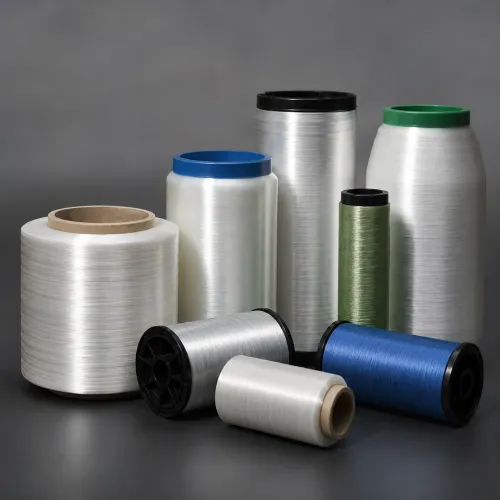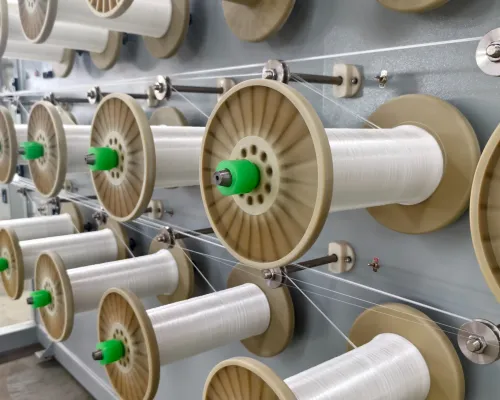

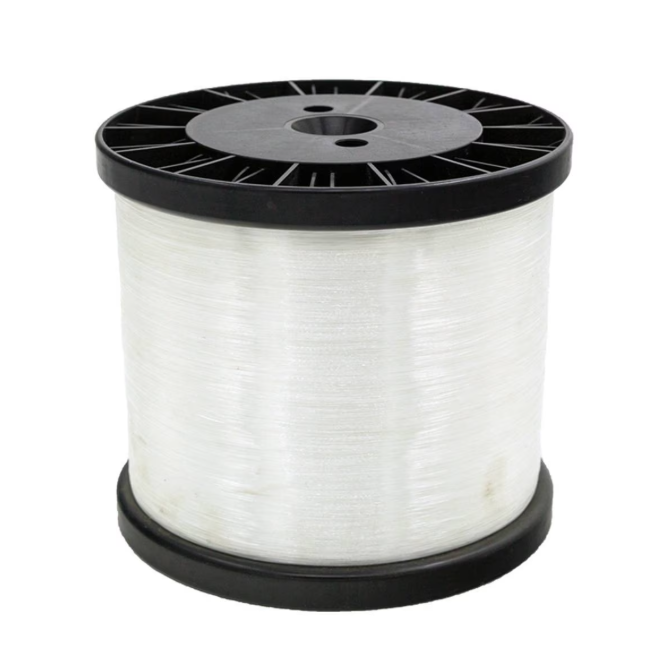
Nylon, PET and PBT monofilament yarns belong to the broader category of synthetic single-filament yarns, but they do not perform identically. Each polymer has a different balance of strength, flexibility, moisture response, dimensional stability and resistance to operating conditions.
Industrial buyers in Mumbai often encounter these materials while sourcing yarn for filtration fabrics, technical meshes, brushes, screens, conveyor components and specialised textile products. Understanding their fundamental differences helps prevent unsuitable substitutions and unnecessary production problems.
Nylon Monofilament Yarn
Nylon monofilament is known for its toughness, flexibility and abrasion resistance. It can absorb more moisture than polyester-based alternatives, which may influence dimensions and mechanical behaviour in humid or wet environments.
Its flexibility and fatigue resistance make it relevant to applications involving repeated movement or bending. Depending on the grade and construction, nylon monofilament may be considered for:
- Industrial mesh
- Fishing and aquaculture products
- Filter fabrics
- Brush filaments
- Technical screens
- Selected sewing or reinforcing uses
The exact performance varies between nylon grades. Buyers should confirm the polymer type and test requirements instead of treating every nylon monofilament as interchangeable.
PET Monofilament Yarn
PET monofilament is made from polyethylene terephthalate, a widely used polyester. It generally offers good dimensional stability, tensile performance and relatively low moisture absorption.
These characteristics can be valuable in technical fabrics where consistent mesh geometry is important. Common application areas may include:
- Filtration and separation fabrics
- Industrial screen mesh
- Conveyor and process fabrics
- Woven technical textiles
- Supporting structures in composite products
- Selected brush and reinforcement applications
Heat exposure, chemical contact and mechanical loads must still be evaluated according to the actual grade and application. The general properties of PET should not replace product-specific testing.
PBT Monofilament Yarn
PBT, or polybutylene terephthalate, is another polyester material used where flexibility, resilience and dimensional control are required. Compared with PET, it can offer a different balance of stiffness and elastic recovery.
PBT monofilament may be used in technical mesh, filtration, brush filaments and other engineered products. Its suitability depends on the required bend recovery, operating temperature, chemical environment and product design.
A Practical Material Comparison
The choice among nylon, PET and PBT should begin with the most demanding condition in the final application.
Nylon may be considered when abrasion resistance, toughness and repeated flexing are priorities. PET can be useful when low moisture absorption and dimensional stability are more important. PBT may suit applications requiring resilience and recovery after bending.
Buyers should compare:
- Required tensile strength
- Permitted elongation
- Moisture exposure
- Abrasion and flexing conditions
- Operating temperature
- Chemical environment
- Filament diameter tolerance
- Mesh or fabric construction
- Regulatory requirements
- Expected service life
Colour, surface finish and additive packages can also affect the final result. For outdoor applications, the supplier should be informed about sunlight exposure. Filtration and food-related uses may require additional declarations or application-specific compliance documentation.
Why Sample Testing Matters
A material that performs well in a data sheet may behave differently on a particular loom or processing line. Sample trials help identify winding issues, tension instability, filament breakage and changes in fabric dimensions.
Mumbai and Maharashtra manufacturers should conduct trials under conditions that resemble regular production. Testing only a short length at reduced speed may not reveal problems that occur during continuous manufacturing.
Asdos Industries manufactures nylon, PET and PBT monofilament yarn for varied technical requirements. A detailed enquiry should specify the polymer preference, end use, diameter, tensile requirement, colour, spool format and operating conditions. This information allows the yarn specification to be aligned more closely with the processing method and expected product performance.